For patients
Your doctor has asked you to wear a heart monitor.
Nothing here is a diagnosis. It is here so you understand what is happening, what the next few days or weeks will be like, and what the report at the end of it says.
What happens
- A sensor is fittedAt your clinic, or sent to your home.
- You live normallyWork, sleep, exercise. It records every beat.
- We analyse the recordingA specialist checks anything that matters.
- Your doctor gets the reportAnd explains what it means for you.
What wearing a monitor is actually like
A small sensor, worn under your clothes, for a few days or a few weeks. It does not hurt, it does not restrict you, and the only thing you have to do is live normally.
It records the whole time
Vigo Life · Log symptom
“Palpitations, after climbing the stairs”
Matched to the recording at that moment
Why you
Why your doctor recommended this.
- Reason 01
You have symptoms
Palpitations, dizziness, breathlessness, or a faint that was never explained. A recording made while you live normally shows what your heart is doing when it happens.
- Reason 02
Something was found
An irregularity on a routine ECG, at a check-up, or during treatment for something else. A longer recording shows whether it is occasional or constant.
- Reason 03
You are being screened
Age, blood pressure, diabetes, a previous stroke or a family history can raise the chance of a rhythm problem that causes no symptoms at all.
What happens
Five steps, and almost nothing for you to do.
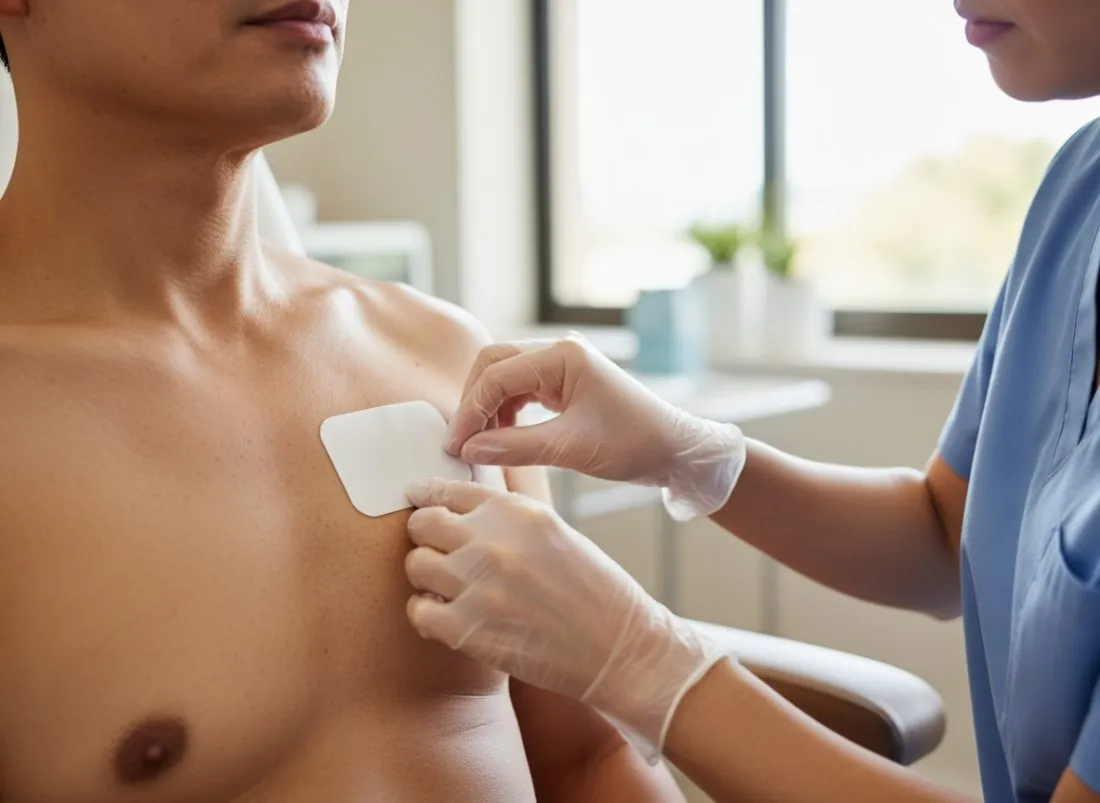
The sensor is fitted
At your clinic, or sent to your home. Either way someone talks you through it, and it takes a few minutes.
You go about your life
Work, sleep, walk, exercise. Normal activity is exactly what we want recorded.
It records the whole time
Every beat, day and night, for as long as your doctor asked for.
We analyse the recording
Every beat is reviewed, and a specialist checks anything that matters before the report is issued.
Your doctor gets the report
And explains what it means for you. The report goes to your doctor, not to you directly.
While you wear it
The most useful thing you can do is forget it is there.
The second most useful thing is to record anything you feel, and when, on the Vigo Life app.
- Do
Log what you feel
If you feel a palpitation, dizziness or anything unusual, use the Log Symptom button on the Vigo Life app to record it. Matching a symptom to the recording at that exact moment is often what gives the answer.
- Do
Carry on as normal
Work, sleep, exercise. If exercise is when your symptoms appear, that is precisely the recording your doctor needs.
- Tell us
If something is wrong
If the sensor comes loose, stops working, or the skin underneath becomes irritated, contact the clinic that fitted it, or Vigo customer support through the Vigo Life app. A short gap in the recording is not a disaster.
If you feel unwell
Wearing a monitor is not the same as being watched in real time, unless your doctor has told you otherwise. If you have chest pain, severe breathlessness, or you faint, seek emergency medical care straight away — do not wait for the recording to finish.